Your First Live Match: A Three-Stage Watching Plan
A first live match watching plan helps you choose a useful focus, read the match’s changing shape and leave with a clear account of what happened.
You find your seat, the teams emerge, and a burst of noise rises from the far end. A first live match watching plan can help you decide what to notice: how the game is organised, how one change affects the next passage, and what you can still see from your seat.
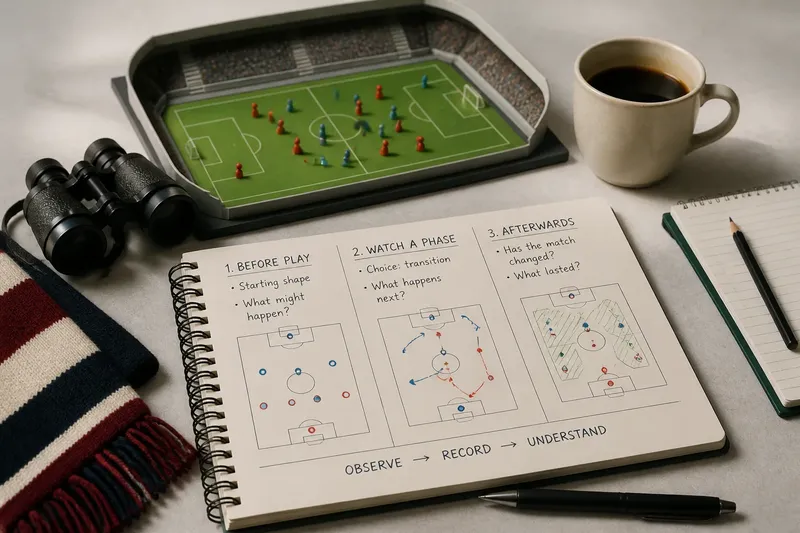
There is no pause button, and the whole pitch will not fit in your attention at once. Instead of following one player and a supposed pattern throughout, use the match’s natural breaks to change your focus. Watch the team shapes before play, choose a phase to examine during it, then consider how the game changed afterwards.
What can you learn before play begins?
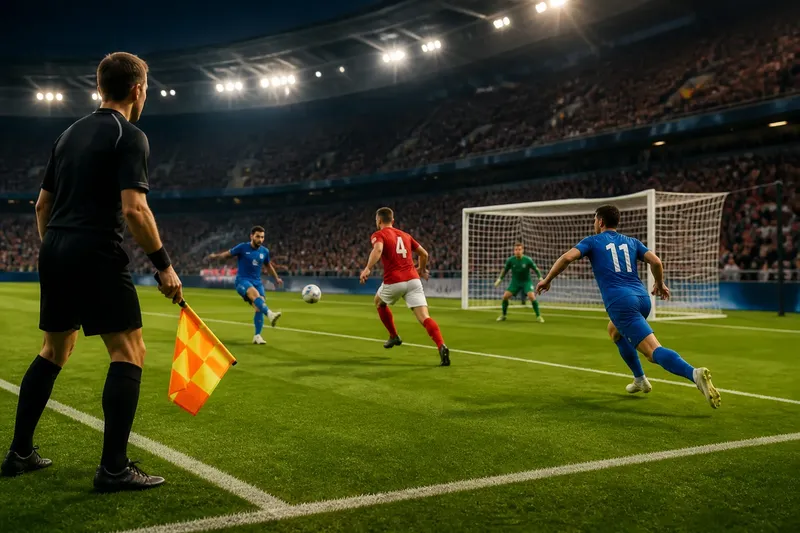
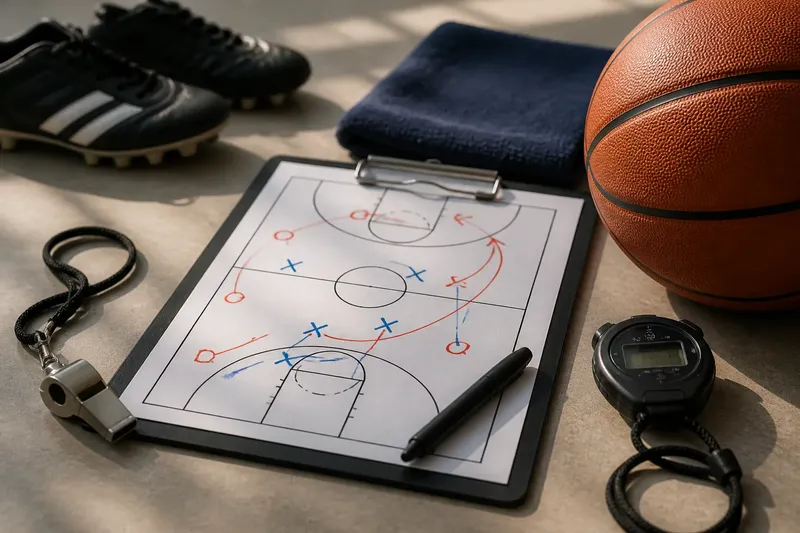
Start with the space and the starting positions. In football, notice whether each side has one forward or several, and whether the wide players begin near the touchlines or closer to the middle. In basketball, see who brings the ball up and whether players spread around the perimeter or gather nearer the basket.
A programme or team sheet can help identify names and positions, but it is optional. If the players are unfamiliar, use shirt numbers and visible roles instead. A substitution will change the picture, as substitutions tend to do.
Use this pre-match view to form a simple question about what might happen, not to declare what a team intends. You might wonder whether a side’s wide players will stay out near the boundary or move infield. Then wait for play to begin before deciding whether the shape appears to hold.
Which phase is worth watching closely?
Choose one kind of moment rather than one person or a pattern you expect to find. A possession change, a restart, or a team trying to move forward under pressure gives you a manageable slice of the match. Watch what happens immediately before the ball arrives, then look at how the next few actions unfold.
In football, for instance, a goal kick can show whether defenders spread out to receive short passes or stay near the goalkeeper while a longer ball is prepared. In basketball, a defensive rebound can reveal whether the team tries to break quickly or waits for everyone to take position. These are different questions, but both begin with an event you can identify as it happens.
Your seat shapes what is visible. Higher up, it is easier to see distances between players and how a team shifts across the playing area. Near the touchline, individual movement and contact may be clearer, while activity at the far end can be harder to read. If you cannot see a detail, do not force an interpretation from it.
Say you are watching football from a seat high above the halfway line. Before play, you notice that one team’s wide players start close to the touchlines. When it wins the ball, you watch that first transition: the nearest wide player stays out, but the other moves towards the centre as a pass goes forward. The result is a specific account of what happened in that passage, not a verdict on the team’s entire plan.
How can you tell whether the match has changed?
Look for a shift that lasts beyond one attack. A team may begin winning the ball farther up the pitch, spend more time near the opponent’s goal, or stop sending a defender forward. A goal or substitution may precede a change, but sequence alone does not explain why it happened.
Separate what you saw from what you suspect. “The away side pressed higher after the break” describes a visible change. “The coach wanted to frighten them” invents a motive that is not available from the stand. If the shift fades after a few minutes, record that too; not every change becomes the new shape of the game.
One concise note can preserve the useful detail: After the substitution, the home side attacked down the left more often, while the away full-back stayed deeper. That records an observable change and its timing without pretending to know what either team discussed.
What questions help you read a live match?
Should you watch a particular player?
Only if a player’s role answers a question you have. Otherwise, follow an event such as a restart or change of possession, which can show how several players respond together.
What should you do if the action is hard to see?
Shift to details visible from your seat, such as which side has territory or how players arrange themselves at a restart. Do not infer a far-side run from the reaction of the crowd alone.
How do you judge whether a shift lasted?
Look for the same change in more than one later passage, such as repeated pressure near one goal or a defender continuing to stay back. If it disappears quickly, treat it as a brief spell rather than a lasting adjustment.
Do you need a programme or score app?
No. A programme can help with names and positions, and an app can clarify a score or substitution, but neither is needed to watch the shape of play. Save the screen checks for a stoppage; an exciting attack is a poor time to study small print.
What is not worth the effort?
Trying to track every player, coach, statistic and tactical adjustment at once is not a serious route to better viewing. It is a route to missing the ball while holding a programme upside down. Pick a question suited to your seat, and let the match supply the answer or leave it unresolved.
For your first live match watching plan, keep a brief note of the starting shape, one phase you examined and a change that lasted or faded. Those details give you a sounder account than a confident guess about a team’s intentions. At the next match, choose a different kind of phase and see what your seat makes visible.